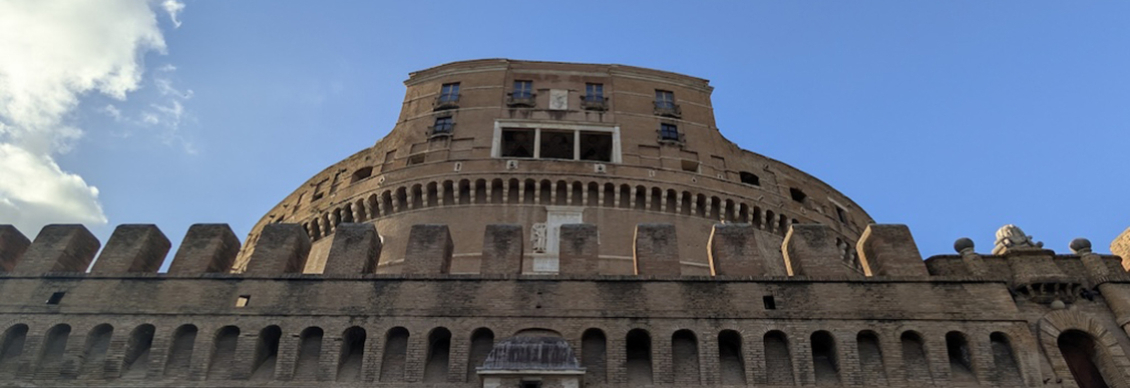
Castel Sant'Angelo is arguably the ultimate symbol of Rome's ability to reinvent itself, standing proudly on the banks of the Tiber River as a 2,000-year-old architectural shape-shifter. If you want to understand Roman history without flipping through endless textbooks, this single building tells the entire story. It began its life in the 2nd century AD not as a fortress, but as a grand imperial tomb. Emperor Hadrian commissioned the gigantic, marble-clad cylinder—then topped with a rooftop garden and a bronze statue of himself—to serve as a resting place for himself and a long line of subsequent Roman rulers, including Marcus Aurelius.
As the Roman Empire began to crumble around 403 AD, luxury took a backseat to survival. With barbarian tribes eyeing the city, Emperor Honorius realized the massive stone tomb sat at a highly strategic river crossing and ordered it to be reinforced and physically stitched into the Aurelian Walls. Almost overnight, the peaceful monument became a gritty, weaponized stronghold. When invaders eventually breached the city, defenders inside the castle famously resorted to smashing the building's priceless marble statues, raining heavy stone fragments down onto the heads of the attackers below.
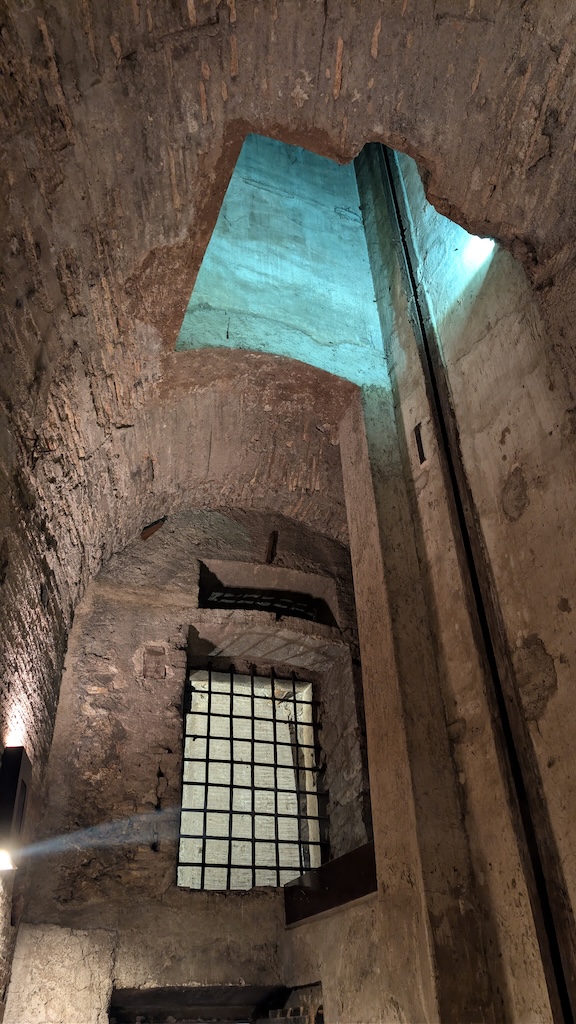
We arrived here having just flown to Rome that morning, dropping our belongings at our apartment, and taking the subway. To say we were beginning the tour already fatigued would be an understatement.
I was excited to tour this structure as I already felt familiar with it. Having been a long-time fan of the Assassin's Creed franchise, in which I was required to scale these formidable walls in a mission from the game, I was impressed to see how much I knew about its appearance and layout inside.
We had paid for a self-guided tour that was to include an app and recorded messages for various parts of the building, but we couldn't seem to get it to work correctly. Instead, we contented ourselves with just examining everything we could with wonder-filled eyes.
The building earned its modern name during a devastating plague in 590 AD, when Pope Gregory the Great led a solemn prayer procession through Rome to beg for divine help. As they crossed the bridge toward the fortress, the Pope reportedly saw a vision of the Archangel Michael standing at the very top of the building, sheathing his sword as a sign that the plague was over. The Romans renamed the structure Castel Sant'Angelo (Castle of the Holy Angel), and a statue of an angel has stood on the roof ever since, though it has been replaced six times over the centuries due to war, weather, and a literal lightning strike.
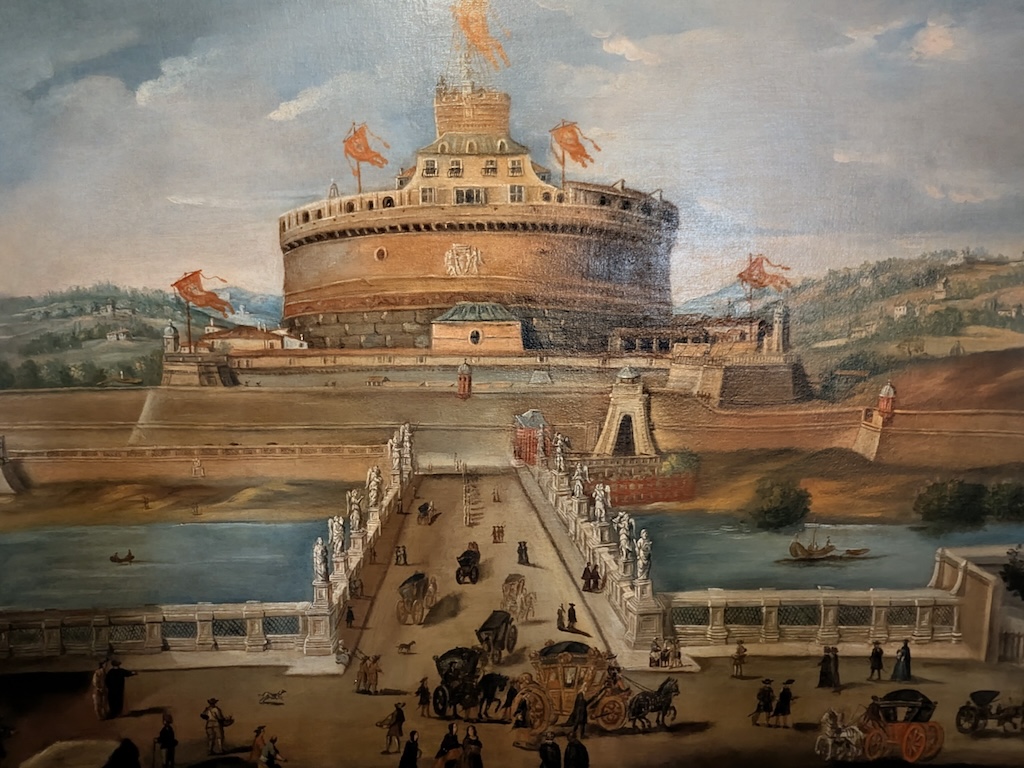
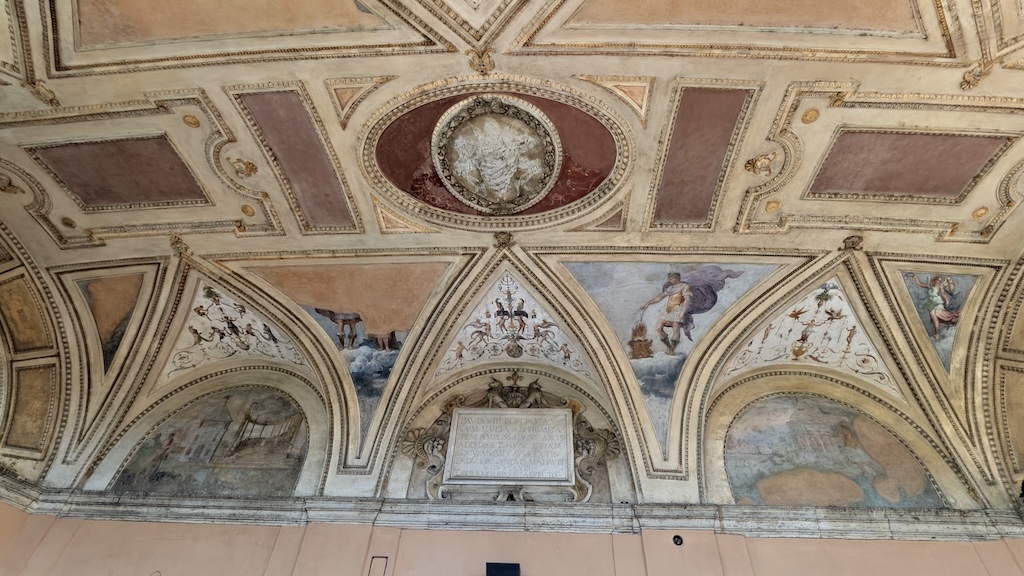
As we wandered, room to room, we saw various museum displays that had little, if anything, to do with this fort or its history. To be honest, I found this a bit annoying. That's not why I was here, and I found it a distraction. I spent more time looking at the architecture of the room itself than the display by which I meant to be impressed.
With two strikes having accumulated in my tired mind against this tour already, I pressed on, willing to give it a chance.
By the Middle Ages, ownership shifted permanently to the Catholic Church, and the Popes realized the Vatican wasn't always safe during a crisis. To secure an escape route, Pope Nicholas III built the Passetto di Borgo—a secret, fortified, 800-meter-long elevated stone corridor connecting St. Peter's Basilica directly to the castle. This structural lifeline saved lives, most famously during the brutal Sack of Rome in 1527, when Pope Clement VII sprinted through the secret hallway while enemy soldiers shot at him, successfully barricading himself inside the impregnable castle walls for months.
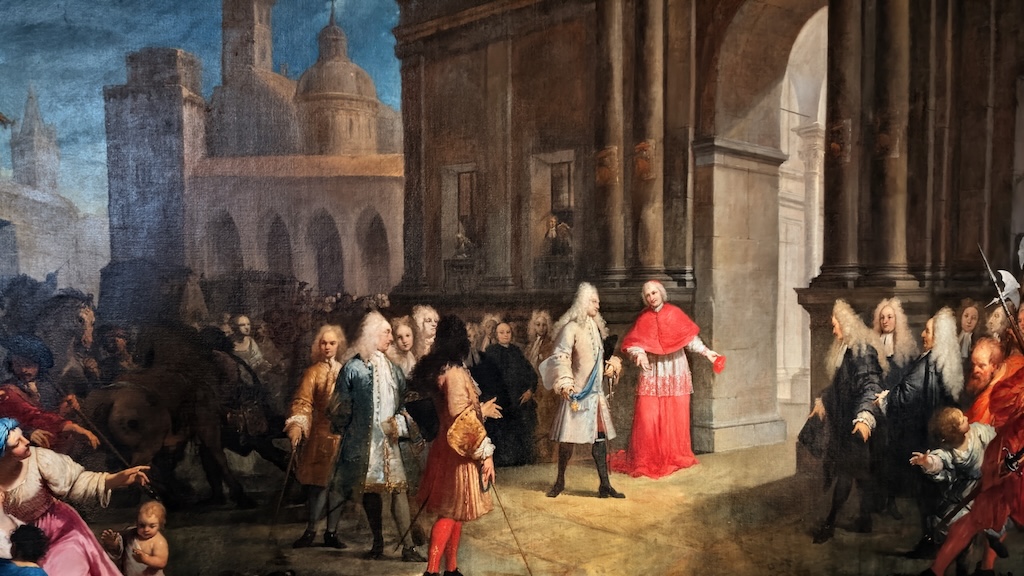
As we viewed the amazing paintings, the decoration, and the architecture, I was coming out of my funk and began to appreciate this fort for what it was. I also began to understand that each Pope who had been here seemed to have tried to outdo the Pope before in terms of the lavish decor. While I suppose this is all quite fitting for a man of the Pope's stature, particular at that point in history, it all just seemed so garish and unneccessary to me today.
Over the centuries, the Popes used the building as both a shield and a multi-level tool of power. The upper levels were converted into luxurious, beautifully frescoed Renaissance apartments suited for royalty, while the deep, dark underbelly of the castle became a notorious prison. Famous free-thinkers, scientists, and artists—including the philosopher Giordano Bruno and the wild goldsmith Benvenuto Cellini—were locked away in its deep dungeons.
After Rome unified into the modern Kingdom of Italy in 1870, the castle retired from military duty, was decommissioned as a barracks, and was transformed into the magnificent national museum you can visit today. Walking through its corridors offers a literal timeline of human history, layered stone by stone.