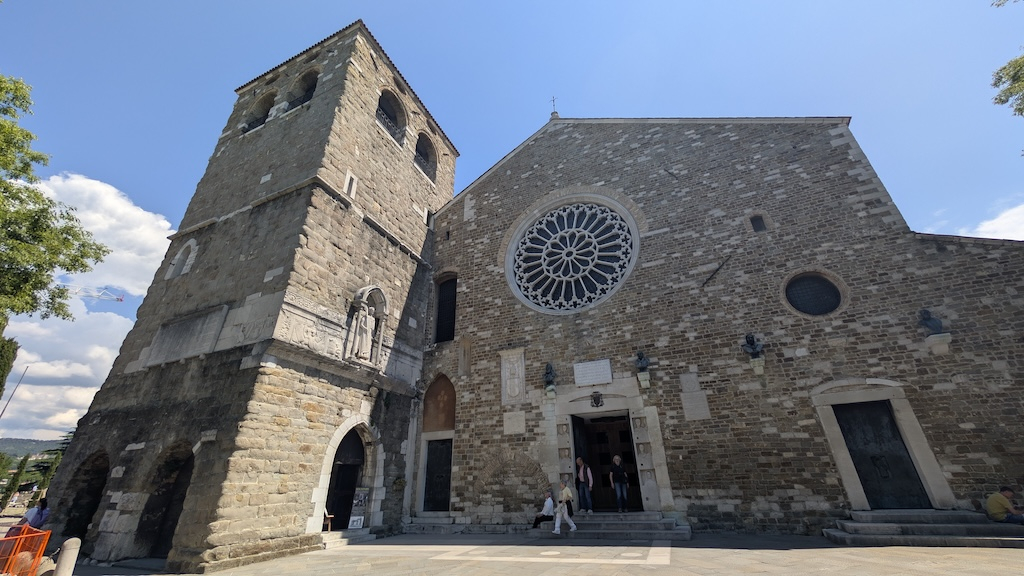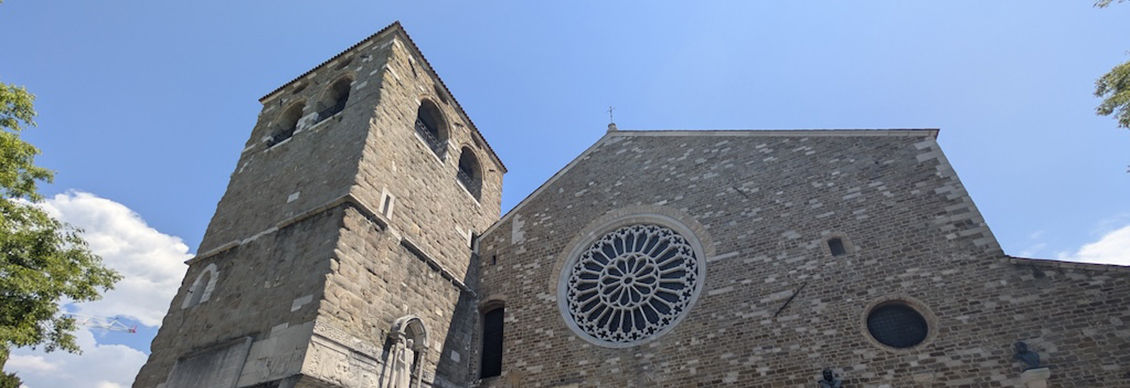
Cattedrale di San Giusto sits on San Giusto Hill, the site of Trieste's civic and religious life going back roughly two thousand years. Before any church stood here, the Romans built a propylaea — a monumental gateway structure — on the hill. It became known locally as the "Capitoline Temple" because a pyramidal altar bearing the symbols of the Capitoline Triad (Jupiter, Juno, and Minerva) was found inside it, though it wasn't a temple in the formal sense. Separately, 1930s excavations on the hill also uncovered the remains of Trieste's Roman forum and civic buildings, a two-story colonnaded structure with two apses — so this hilltop was doing double duty as both religious and administrative center in Roman times.
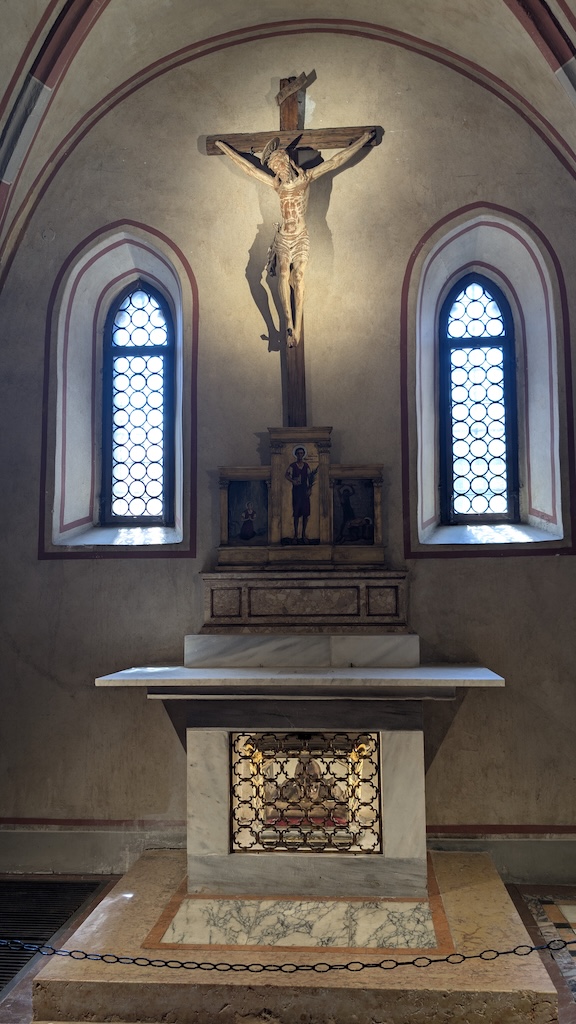
We were thankful that it was still morning, and the day's heat had yet to be upon us, as we climbed this significant hill. We were, largely, just wandering as we had time away from the cruise ship. The street we were on was exclusive to pedestrians, and "paved" with uneven cobblestones. When we reached the top, we were presented with this church that was obviously quite old. I saw people entering and exiting so I had to go in and look.
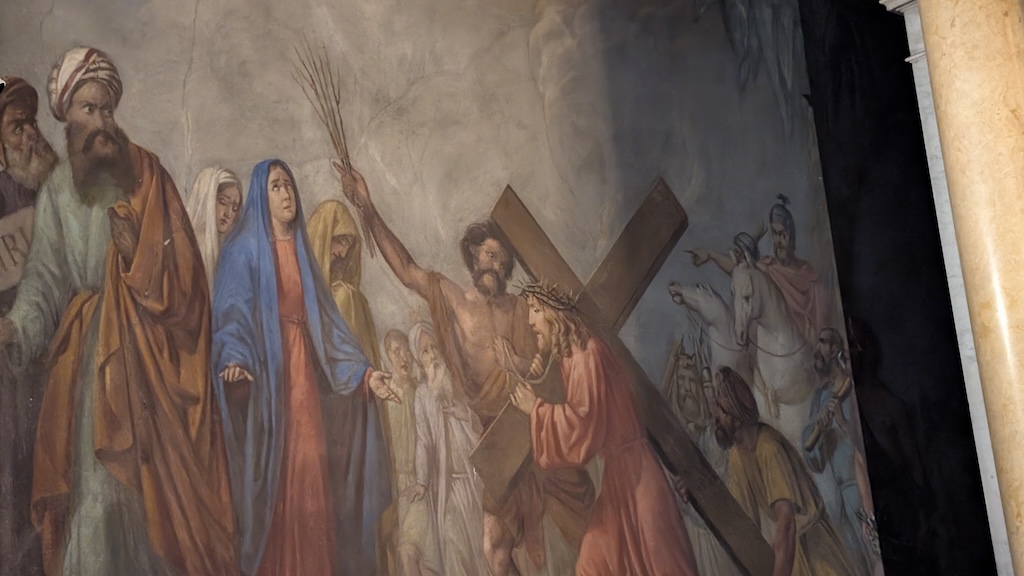
The age of this building was immediately apparent, and even more pronounced inside. Yet, like its more modern counterparts, there was no amount of artistic detail spared on almost every inch. Pictures simply could not do it justice.
The cathedral is named for Trieste's patron saint, Justus (San Giusto), who according to the earliest surviving source — a 9th-century manuscript — was martyred by drowning in 293 AD, thrown from a boat into the Gulf of Trieste for refusing to renounce Christianity. (Some later accounts place his death in 303, during Diocletian's persecutions, but that appears to be a less accurate tradition that arose before scholars had access to the earlier manuscript.) A church was first built on the hill in the 6th century in his honor, but it was destroyed during the Lombard invasions. Between the 9th and 11th centuries, two separate basilicas rose from the ruins — one dedicated to Our Lady of the Assumption, the other to Saint Justus — standing side by side.
Those two basilicas were physically merged into the single cathedral you'd recognize today between 1302 and 1320. Rather than starting fresh, builders demolished a shared nave wall and joined the two structures under one roof, giving the building its distinctive five-aisle layout and an asymmetrical Gothic façade dominated by a large rose window. The bell tower was built using Romanesque-era debris stones and carved friezes found on site. The cathedral was consecrated in 1385, and Pope Leo XIII later elevated it to the rank of basilica minor in 1899.
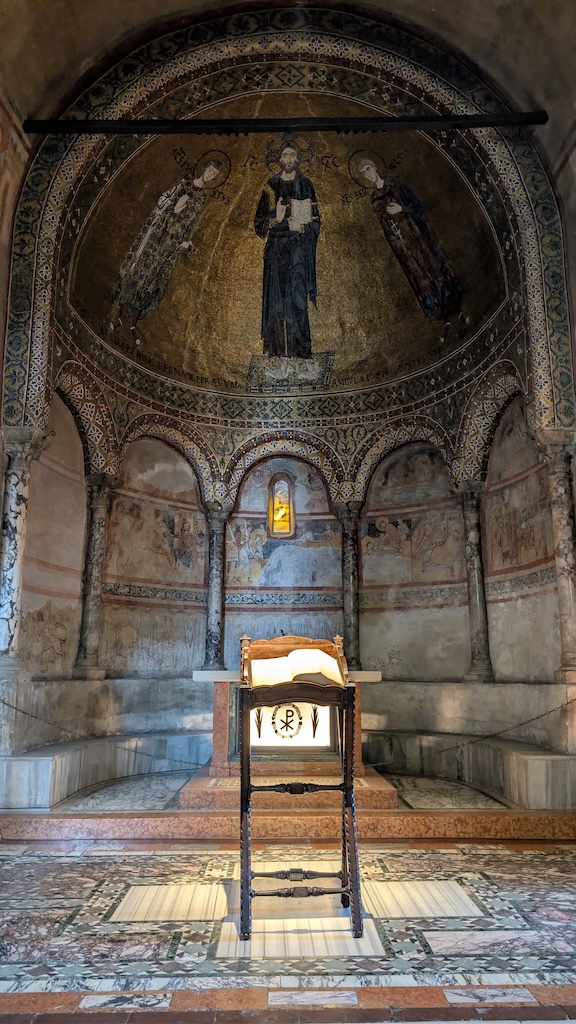
The undisputed highlight inside is the apse mosaics — Byzantine-influenced work from the 12th–13th centuries, created by craftsmen from the Veneto region, depicting Our Lady of the Assumption in one apse and Christ flanked by Saints Justus and Servulus in the other. The cathedral also holds the Carlist mausoleum, the burial chapel for several generations of the Carlist claimants to the Spanish throne, including Carlos, Duke of Madrid. Just outside, a small medieval churchyard rounds out the complex, with the 14th-century church of San Giovanni, an old baptistry, and San Michele al Carnale near the entrance.
Today the cathedral remains the seat of the Diocese of Trieste and an active parish church, sitting beside the Castello di San Giusto on the same hill. Between the Roman ruins, the merged medieval basilicas, and the later fortifications, the hilltop functions almost like a physical timeline of the city — you can trace Trieste's history in a single short walk.
360 Video: