
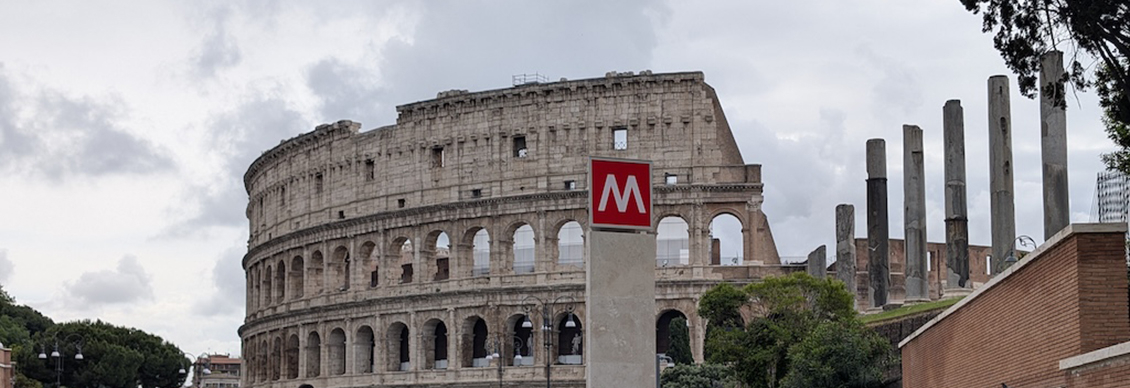
The Roman Colosseum, originally known as the Flavian Amphitheatre, is one of the most famous buildings of the ancient world. It stands in the heart of Rome and remains a powerful symbol of the Roman Empire. Construction began around AD 72 under Emperor Vespasian, founder of the Flavian dynasty, and was largely completed by his son Titus in AD 80. Later additions were made by Emperor Domitian, creating the vast structure we recognize today.
We arrived via the subway in plenty of time for our tour. We had arranged one of those skip-the-line type things since I had been told by others that lineups could sap our entire day. We walked down the street to find our tour group, excited by what we were about to see.
The site chosen for the Colosseum was highly significant. It was built on land that had been occupied by Emperor Nero's extravagant palace complex, the Domus Aurea. After Nero's death, Vespasian sought to return this area to the Roman people. By replacing a private imperial playground with a public entertainment venue, the new emperor demonstrated his commitment to restoring stability and public goodwill after a period of political turmoil.
As our group approached the Colosseum, certain details began to stand out to me, and questions began to form. Why were parts of the building missing? Had it all been built? And I couldn’t wait to see the tunnels and works beneath the “stage” area in which the gladiators and animals waited to put on their various shows for the entertainment of the masses.
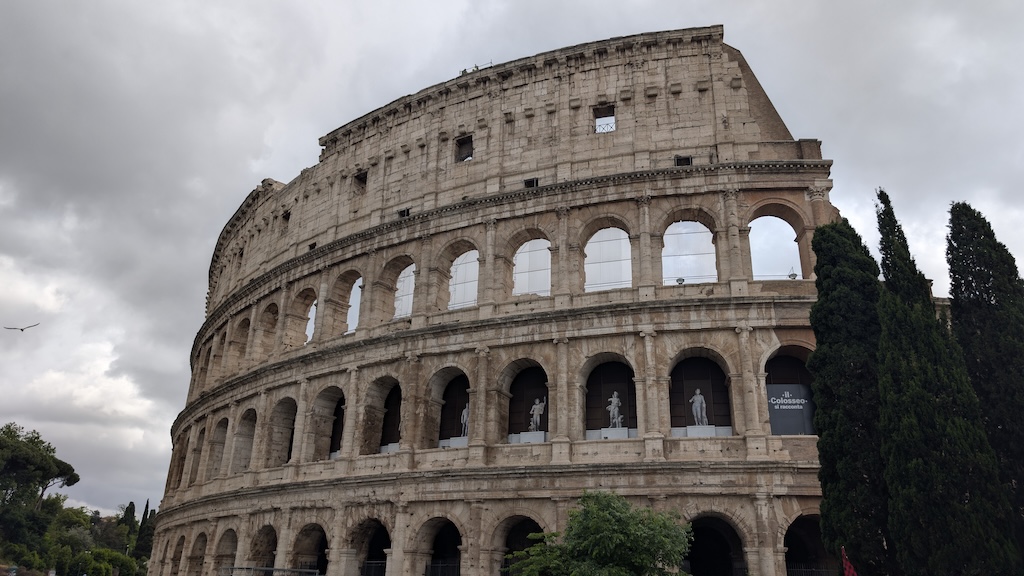
Architecturally, the Colosseum was an extraordinary achievement. Built from stone, concrete, and brick, it was the largest amphitheater ever constructed in the Roman world. The oval structure could accommodate tens of thousands of spectators, with seating carefully arranged according to social status. Ingenious engineering features included numerous entrances and exits, allowing crowds to enter and leave quickly, as well as a huge retractable awning called the velarium that provided shade on hot days. Think SkyDome!
We saw Roman numerals over the entrances as our guide told us that entry was free to Roman Citizens, and tickets, like today, indicated which entrance, section and seat were yours for any given show. Having been in several large arenas, it was fascinating to me to see how little had really changed.
The Colosseum became the centre of Roman public entertainment. Spectators flocked there to watch gladiatorial contests, animal hunts, executions, dramatic performances, and re-enactments of famous battles. When Titus officially opened the arena in AD 80, celebrations reportedly lasted for one hundred days. These spectacles were intended not only to entertain but also to demonstrate the wealth, power, and authority of Rome and its emperors.
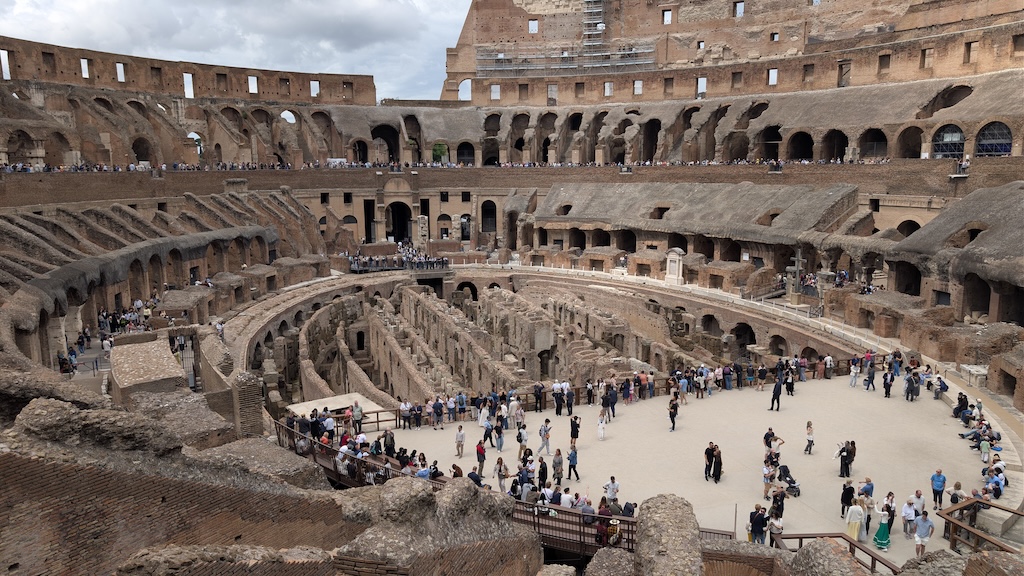
As the Western Roman Empire declined, the Colosseum gradually lost its original purpose. By the early medieval period, large-scale games had ended, and the structure found new uses. Over the centuries it served as housing, workshops, a religious site, a fortress, and even a quarry for building materials. Earthquakes caused significant damage, while valuable stone and metal were removed for use elsewhere in Rome. As a result, much of the original building disappeared.
Apparently, some of the stone and statues found their way toward construction of the Vatican... Not surprising.
Our tour guide was amazing, with a great sense of humor, and encyclopedic knowledge of a place she told us she once played as a child.
Despite centuries of neglect and destruction, the Colosseum survived and eventually became a treasured historic monument. Restoration efforts began in earnest during the nineteenth century and have continued into modern times.
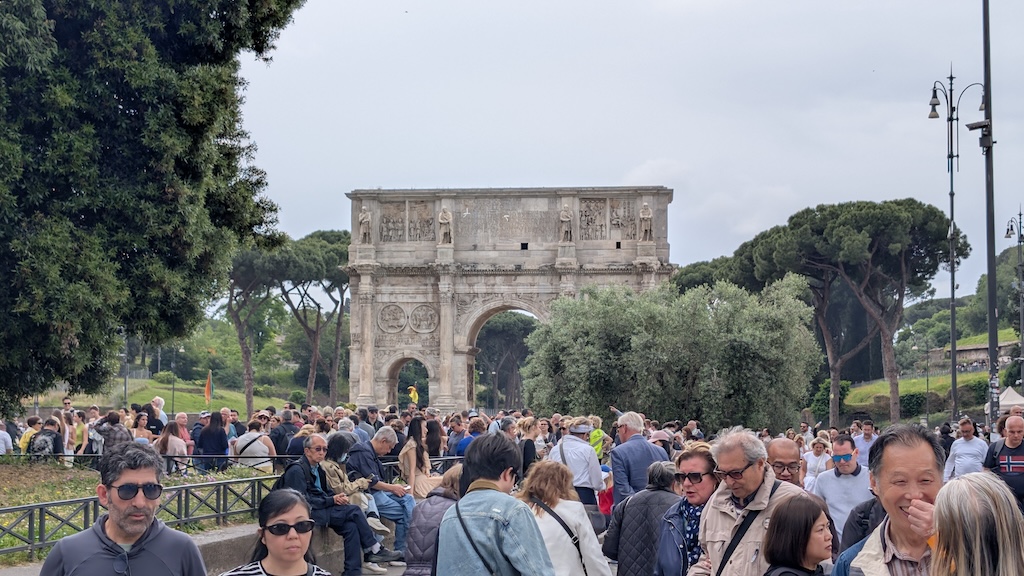
Like most of these historic monuments, the volume of visitors is almost off-putting. It some ways, it made it difficult to imagine what the Colosseum must have been like in its day. In other ways, it was a perfect representation of the masses who must have walked through this massive structure seeking to be entertained and transported from their everyday lives. I’m not sure that I would feel a need to return there, but our subsequent walk around Palatine Hill would definitely warrant a return with more time.
360 Video:




Comments