Image

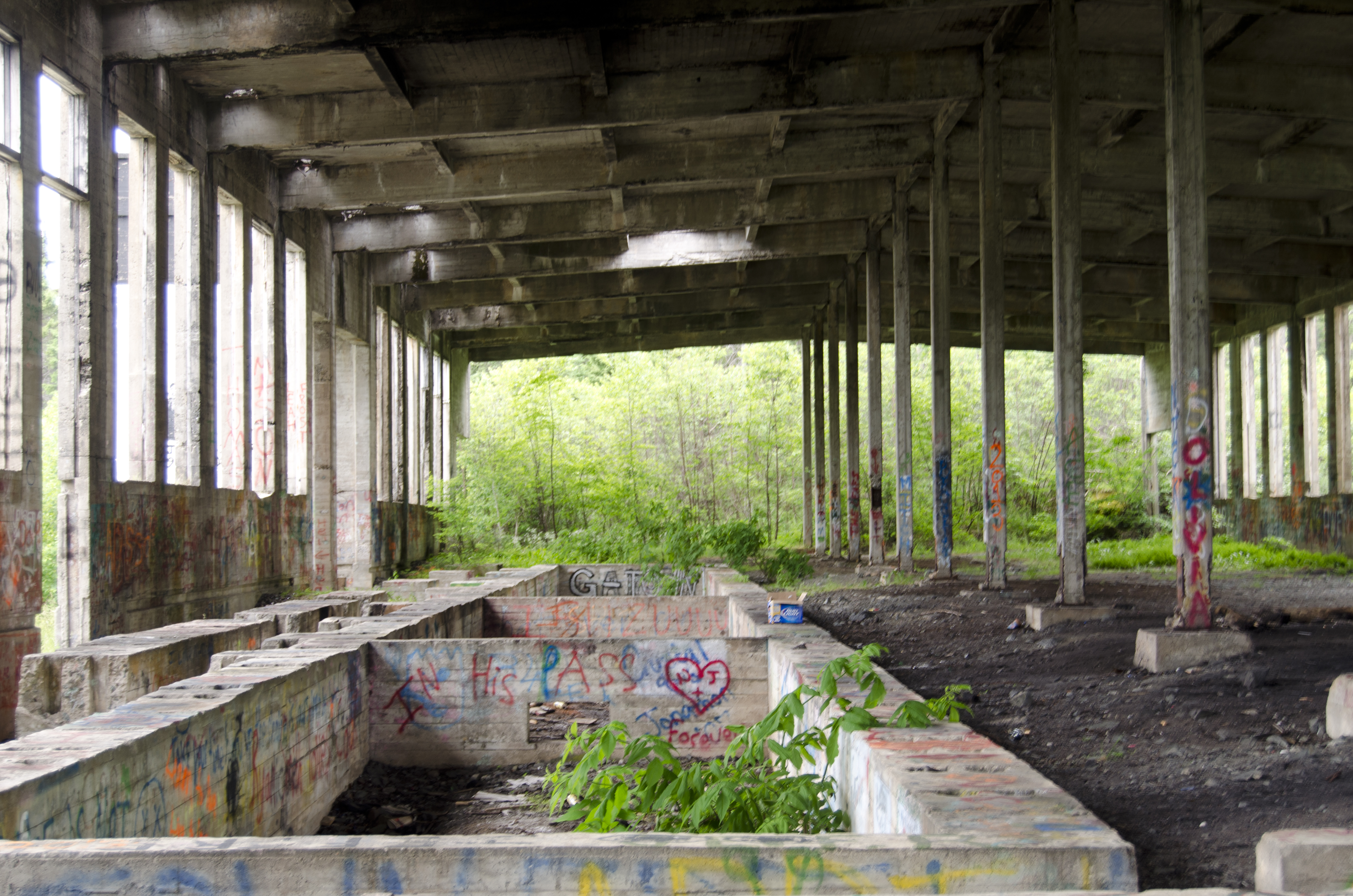
Coxton Yard was built in 1870 by the Lehigh Valley Railroad Company to facilitate the vast train activity required to support Pennsylvania's coal mining industry.  By the end of World War II, however, technology began catching up with the railroads.  Trucks on the expanding highway systems, and the move from coal to diesel-electric trains were bringing about the beginning of the end for operations at Coxton Yard.  It was finally abandoned in 1996, though the Reading and Northern Railroad Company still uses the southern-most portion of the yard to support natural gas extraction.

Read More...

Image

There is little that I'm able to gather about this location except that the station appears to have been built sometime around 1913, while the switch house was constructed two years later.  Major improvements were done to the track around the same time, including construction of the tunnel through which the road passes under the track.  A cut-off line was constructed at approximately the same time that I believe followed what is now the "Endless Riding Trail" to Montrose, PA.  Construction of the cut-off caused great upheaval for the little town, including having the windows constantly shattered by dynamite blasts.

Read More...

Image

Business here began in 1918 as Holmes Blunt Ltd., opened by J.S. Blunt. The foundry manufactured car parts, predominantly engine-casting blocks for Ford.

Read More...

Image

At first I had no idea what this place was, and had in fact listed it here simply as an Unknown Building in Pennsylvania. Thanks to some great help from Bernard Stiroh at duryeapa.com, I found out that this was the Forest Castle Brewery.

Read More...

Image

Fort Tilden was named for Samuel J. Tilden, governor of New York and Presidential candidate. It was established in 1917 as part of the emergency fortification for World War I and was intended to defend New York from attack by sea or air.

Read More...

Image

New York City required a municipal airport and several locations for it came up for discussion. The mayor of the time, Fiorello LaGuardia, wanted it placed on Governor's Island. Despite this, the site chosen was Barren Island.

Read More...

Image

I drove along the street, looking for the specific building I wanted. There were more run-down industrial buildings along here than I expected, so my head was kind of on a swivel. I love this sh*t!

Read More...

Image

This building was originally constructed as a drying house in 1894, with a single silo added in 1925 for William E. Kreiner of Kreiner Malting Inc. A second silo was added in 1936, bringing the storage capacity to 180,000 bushels.

Read More...

Green Hosting Badge